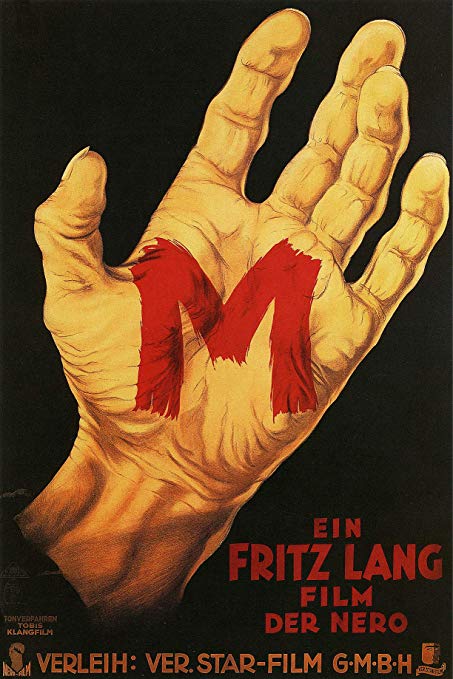
Fritz Lang’s M is a film with a simple premise and like most well remembered and taught films, is filled with layers of complexity. Film characters are not always an easy good versus evil. In M, someone in the town is murdering children and the citizens are in an obvious and well-deserved uproar. The narrative itself does not encourage sympathy for the murderer nor would the value system of almost any audience member. However, the film does provide a space for empathy with Hans Beckert by the way he is represented visually. Lang’s patient and though out the introduction, his visual representation during his failed attempt and the immediate aftermath of it all point to Beckert as more mad and thusly sympathetic, than a cold-blooded killer who enjoys his actions.
Beckert’s face is cleverly not shown during the murder scene at the beginning of the film. He exists to the viewer only as a shadow and a few moments later, as the back of man’s head. The crime happens off camera and is told from the point of view of Elsie Beckmann’s mother. The following ten minutes of the movie are sequences of the public’s panicked outcry and the authorities first response. Just like the townspeople in the film, the viewer is also blind to the identity and motive of the killer. Then Beckert writes a letter to the press. It reads “Because the police didn’t publish my first letter, I am now writing directly to the press! Proceed with your investigations. All will soon be confirmed. But I’m not done yet!” This established that Beckert has written to the police in the past, and this current letter contains a dare to continue to investigate him, a confession, and a declaration that he is going to continue. His handwriting is then investigated by experts in the field. They proclaim, as we finally get our first reveal of the face of the killer, that “The writing as a whole displays elusive yet unmistakable signs of madness.” This ladies and gentleman is your killer!
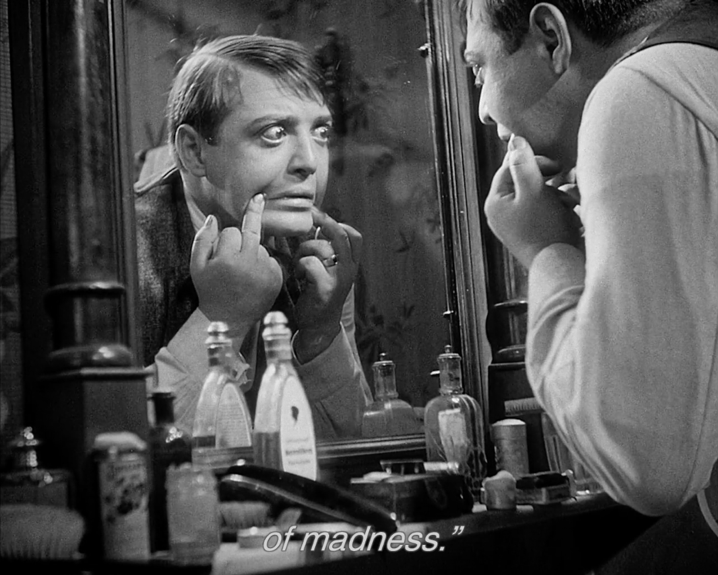
This introduction to Beckert was intentional. His actions are vile but the man is mad, how could he have helped himself? We have to have some sympathy for a guy who can’t control his actions, right?
The halfway point in the film marks Beckert’s second on-screen attempt to cash in on his promise that he isn’t done yet! Beckert makes his way down a street and stops at a window. He is very casual about it, eating an apple, hand in his pocket, checking out merchandise. The reflection casts an eerie sight upon him. What we see is a man who looks as though he has been armed, with a bandolier of knives from his shoulders to his chest. What he sees is a little girl in the reflection in the mirror that the knives surround. The film has already claimed that he exhibits symptoms of “madness” and this shot shows exactly that. The casual nature has disappeared. Beckert’s demeanor has changed, his eyes are closing, he scratches his hands, he rocks back and forth, it seems the monster is taking over. The opening of the film gives the impression that these murders are well planned and thought out. This scene shows that Beckert may not be planning any of this at all. As Beckert goes to follow the girl Lang frames this shot on the viewer.

Here is a man staring back at himself. Beckert is both looking at himself and looking toward the girl. One eye fixated on himself and one on his prey. This shot makes it pretty clear that Beckert is a divided man.
He follows the little girl who eventually catches up with her mother. As they walk back in the other direction, Beckert hides in the doorway of another store. It is interesting that he hides his face during this scene as well. He is unaware the police have been to his apartment and yet he hides his face regardless. The only person here he would need to hide from is himself. If it wasn’t obvious enough that Beckert is more crazy than evil, Lang drives the point home by framing him next to an arrow moving up and down and a spinning wheel with a hypnosis spiral on it.
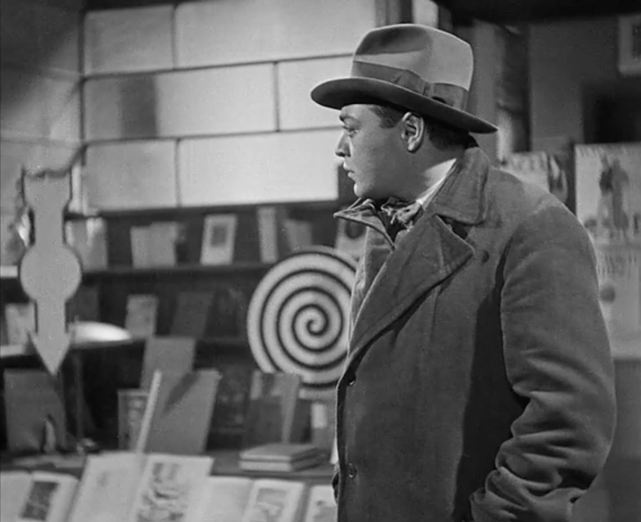
In the scene, Beckert shows the effects of hypnosis. His state of consciousness seems to have been altered and he is almost completely unaware of his surroundings. There is even a moment in the scene when Beckert has a second thought of going after the girl even though she has already been reunited with her mother. While scratching at his hand like he did when he first saw the girl, he takes a step toward them before retreating into a café for a drink. He has all but lost all control of his actions.
The theme of the film is more about uncertainty and authority than about good and evil and punishment. In fact, the viewer never even finds out how Beckert was punished for his crimes or if he ever was. The ambiguity that is created between the police and criminals about which group’s authority should be recognized exists within Beckert. Is it the man Beckert, responsible for his actions or is it the monster inside, of whom a clear representation has been visually represented? This paper argues it is the ladder. The film paints a sympathetic character out of Beckert. The violent acts and murder of a child are all left to the viewers’ imagination as they all happen offscreen. Since we cannot assess how the character acts while committing the crime we can only assess what is onscreen. Lang represents Beckert visually as infected with the madness as it is proclaimed at the beginning of the film and the viewer should see the same, crazy yet sympathetic character.
THANK YOU FOR YOUR SUPPORT!


 Movie Blind Spot
Leave a comment