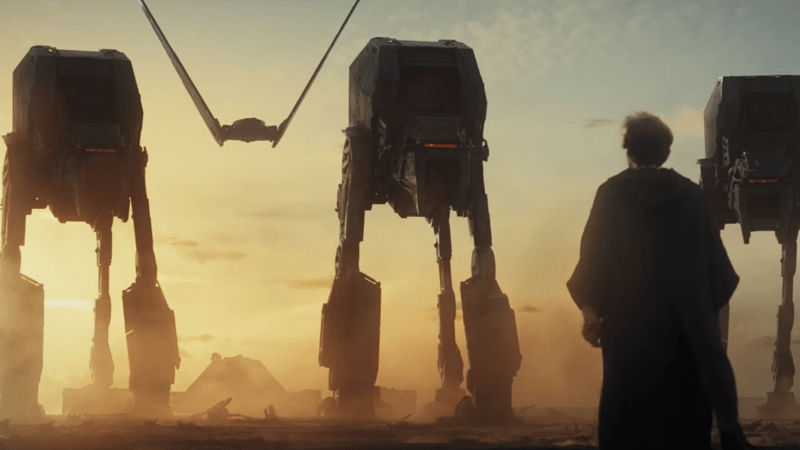
On October 30th, Disney announced that they had acquired Lucasfilm from owner and creator of Star Wars George Lucas. If “breaking the internet” was a thing yet, this might have been called that. Fans collectively either felt joy or sadness but something was felt. A disturbance in the force. Have you felt it? Shortly after the purchase, Lucasfilm President Kathleen Kennedy announced there would be a new Star Wars trilogy. It would be a sequel to the original trilogy in which we saw the last of in 1983. The sequel trilogy would focus on recreating the tone and feel of the original films and obviously, trying to recreate the success both culturally and financially.
A quick history of Star Wars – Star Wars releases in May 1977. It becomes the highest grossing film at the time and it immediately entered into pop culture. The sequels, The Empire Strikes Back and Return of the Jedi were also hits with the fans and with Lucas’s bank account. The prequel films are released almost a decade late and do quite well financially. However, they don’t sit well with the fans or film critics. Everyone thought this was the end for Star Wars, at least on the big screen. Smaller stories could be told through other mediums but that was it for theatrical production. Then, it was announced that with the purchase of Lucasfilm, a new Star Wars trilogy would be produced. This announcement both excited and worried fans but the reaction did not matter, the movies would be made.
Star Wars has always be looked at as a prime example of the hero’s journey. At the time of its release in the summer of 1977 America’s confidence in its leaders and heroes was at an all-time low. The effects of the Vietnam War and Watergate scandal gave little hope and trust to the culture. Although we did not know it was coming, or maybe we did, Elvis Presley would die a few months after Star Wars is seen in cinemas. The film was in a perfect position to fill the void left by real-life disappointments. People like a hero and they were about to get one. The real question remains is why after all this time is the film still so revered?
Gordon summarizes in Star Wars: A Myth For Our Time that Star Wars is a combination of America’s most self-realized qualities, inventiveness, and creativity and makes the old new again (1978). Due to the nature of it coming together, it reflected the feelings of the millions who saw it on its initial run. It felt like the entire nation had put in to make the film. The movie became more important than almost any other in history and was entered into the pop culture hall of fame instantly. People were nostalgic for it as soon as they were done watching it. The opposite seems to be the case for The Last Jedi as the film received some fan backlash.
The film itself, then, is a significant investigation of the Star Wars mythos itself, from an outwardly, figurative and character point of view. In a world as polarized as our modern day, a movie expected to be a black and white, good versus evil story became a nuanced critical thinking piece. The film doesn’t follow the expected narrative, subverting at almost every possible point because the film isn’t about the myth, it is using the story to do what the monomyth should do. In the section of The Hero With A Thousand Faces titled, The Hero as a World Redeemer, Campbell ties the atonement with father (tyrant, ogre) with the hero representing change. “He (father) is the representative of the set-fast, as the hero is the carrier of the changing.” (p.325) It is not only important that the hero change but that he brings change with him. In regard to the topic at hand, He (original trilogy) is the set-fast and the hero (The Last Jedi) is the carrier of the change. “Let the past die, kill it if you have to” (Johnson, 2018)
The Hero With A Thousand Faces provided a synthesis of many texts to create an overall pattern of how a story is told. The reason for this – all cultures try to tell stories that pass on values and experiences. This narrative analysis of Rian Johnson’s The Last Jedi is a deconstruction of the monomyth and replaces the hero, Rey, with the film itself. Dan Harmon (2009) has simplified this text down to eight steps, which this analysis will follow. The steps are as follows:
- You (Film franchise in a zone of comfort)
- Need (Cannot continue the status quo)
- Go (Make a subversive, unexpected film)
- Search (Find new meaning in Star Wars)
- Find (The film itself)
- Take (The price of fan backlash)
- Return (Old Star Wars dead, new Star Wars emerges)
- Change (No longer rely on original films)
The first stage begins with our franchise in a place of comfort. The Force Awakens was a roaring success. It followed too many (if not all) of the beats of the original films. Han was Han, Leia was Leia. The nostalgic beats were important but the film did address the idea of moving on. Franchises, however, must be careful in how they accomplish this by paying close attention to particularities and conventions but not reduce them to generic means (Robertson, 2016). This is where the break with fans happened. The fans expected Rian to remake The Empire Strikes Back beat for beat. J.J. Abrams film did pay close attention to the franchise’s established conventions and only strayed where he thought it needed to. He killed off a little of the past but the fans were okay with this decision because Han had passed the torch, or rather the Millennium Falcon, down to Rey and the new could take over.
The second step begins with the need for change. With new ownership, the Star Wars franchise wanted to become something different. Lucasfilm rejected the old ideas from George Lucas and proceeded to tell the story their way. The refusal to the call was The Force Awakens and the mentor has finally appeared in the form of Rian Johnson.
So Rian Johnson goes and creates The Last Jedi and it virtually upended everything we know about Star Wars. The dark (evil) and the light (good) are now gray. The force no longer belongs to the Jedi. Anyone can be a force user. Fuel exists now and the loss of unnamed characters matter. Sounds a lot like real life doesn’t it? We are now in unfamiliar territory. The moment when Luke throws the lightsaber over his shoulder signals the crossing of the threshold into the unknown world. The old world is behind him and it is time to move forward.
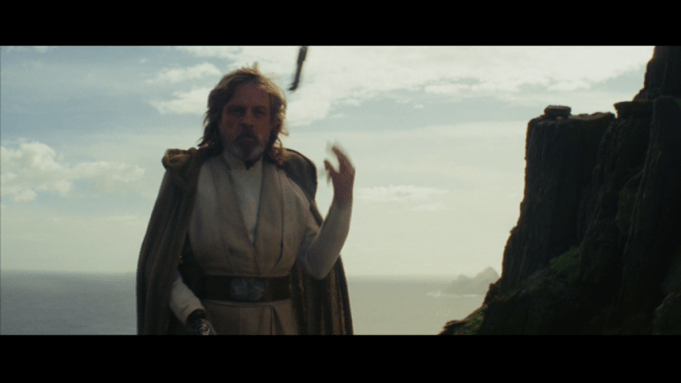
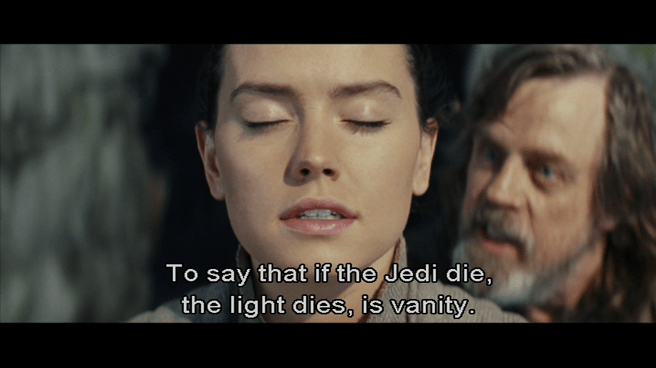
The search is on. Star Wars has to take on new meaning. Luke begins his first lesson with Rey on the island. Rey says, “We need the Jedi order back because Kylo Ren is strong with the dark side of the force.” (Johnson, 2018) She is trying to get back to the simpler times in Star Wars films when a binary choice was all that existed. Luke does not allow her to think this way. She representing the fans perspective about the Jedi and claims that they can use the force to control people and make things float. This simplistic approach to the Jedi and the force was prevalent throughout The Force Awakens and is, basically, redefined here. The lesson, the force or Star Wars lore, in this case, does not belong to the Jedi. In fact, you are vain to think that if old Star Wars dies, all Star Wars dies.
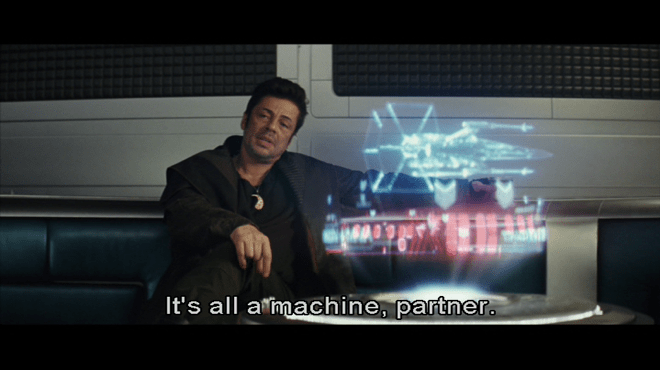
Much has been said about the side stories in The Last Jedi. The most criticized would be Finn and Rose’s storyline to go to a casino planet, Canto Bight. It is not the setting or the characters that fans rejected but the theme of the plot point. Finn asks why Rose hates the place so much. Her response is for Finn look beneath the surface. This is asking fans hoping to just continue in the simplicity of good versus evil to actually peel back the cover and look underneath. When it is later revealed that the dealers on the planet supply both sides with weapons, it shocked many fans. Subverting the classic struggle provides another break with many fans. If the dealers only supplied The First Order, all is forgiven, bit this extra dynamic makes it more complex and somewhat erases and adds to the lore at the same time. New meaning in the galaxy is now available.
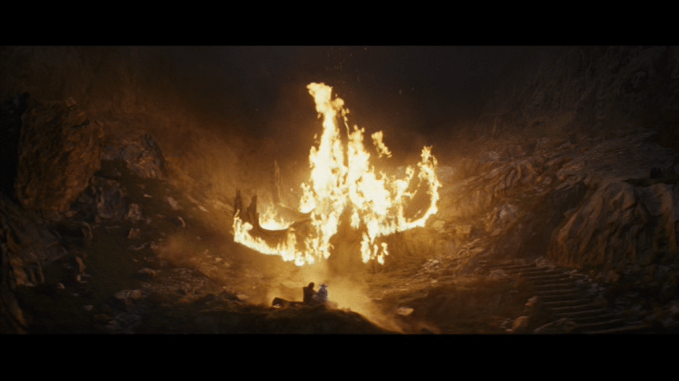
Then the film has found what it was searching for. In the scene where Luke goes to burn down the tree containing the sacred Jedi texts, he cannot, he cannot leave the past behind him. Yoda appears and burns the tree down himself. Luke is distraught but Yoda gives him and the audience a piece of advice. “We are what they grow beyond, that is the burden of all masters” (Johnson, 2018). Here, Luke and the audience must realize that Star Wars must move on and not be trapped by the past.
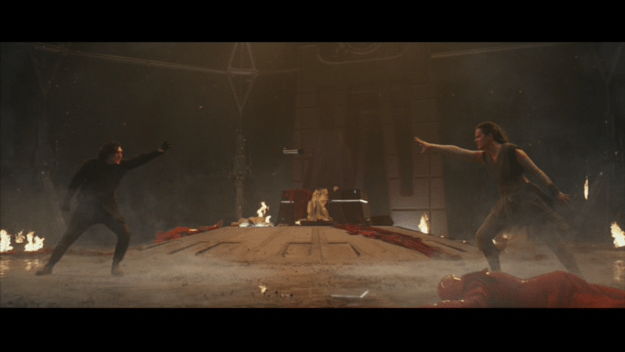
The climactic showdown between Rey and Kylo in Snoke’s throne room finishes the metaphor of burning it all down to start anew. Emerging from the battle victorious Kylo speaks to Rey. He tells her it is time to lets the past die, all of it. He is angered at her for holding on. She and the audience must let go. The fight over Luke’s lightsaber, the artifact of the past, and in the end it is destroyed. It must be.
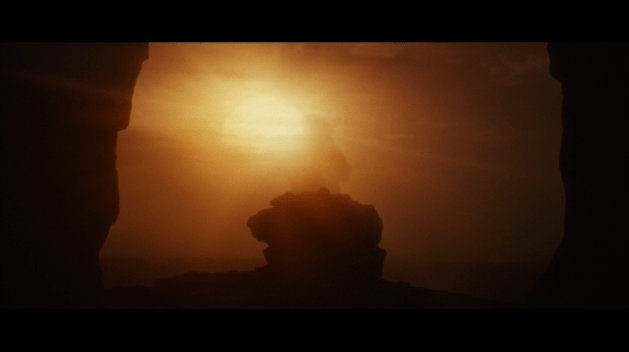
The film pays a heavy price for changing and subverting the franchise’s mostly established conventions. Not at the box office but in the minds of many Star Wars fans. The film also ends without a regular cliffhanger. The finality felt at the end of the film is not the finality of the franchise but the finality of the franchise’s established means. When Kylo Ren sees Luke on the ground at the end he tries to destroy him by force, violently. First with the powerful weapons of The First Order and then by his own hand. Kylo says to Luke “The resistance is dead, the war is over, and when I’ve killed you, I will have killed the last Jedi.” Luke replies, “ No, the rebellion is reborn today, the war is just beginning and I will not be the last Jedi” (Johnson, 2018) He is asking the audience for their consent to move the films along. It turns out that Luke is not even on the planet and has projected his essence there. Kylo cannot physically kill him. After the encounter Luke, staring into the twin suns he stared into as his journey began in A New Hope. He fades away becoming a part of the larger galaxy.Luke cannot be killed for the franchise to move on, his death must be accepted as an inevitability and one that was his choice to make. Allowing the audience to choose as well.
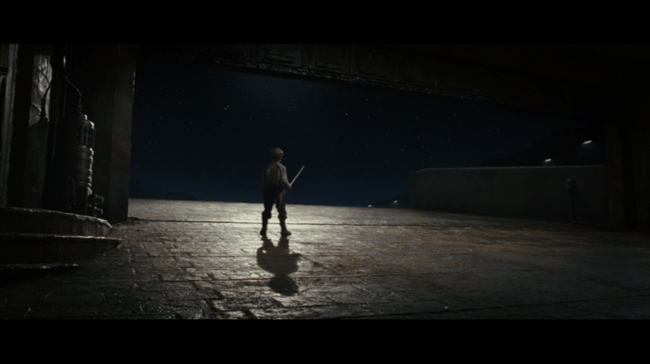
The last scene in the film shows us the change the franchise has gone through. It ends with a child looking hopefully to the sky for a brighter future. He represents a new generation of fans, ones who are not held down by Star Wars’ past. They consider Luke Skywalker a legend and his sacrifice will be remembered as a time in which they can look forward, to the future of Star Wars.
So why the backlash? Why did so many fans feel alienated from the film? The response on Twitter seemed to say a majority of fans disagreed with the direction of the films. This has been mostly debunked as many as half of the Twitter accounts expressing their negative feelings on the film were either bots or trolls, programmed to use pop culture for political gain. (Bay, 2018) That does leave the other half, concerned and confused fans who really felt like they lost something. The ownership of a trademarked intellectual property had changed hands on a legal and fiduciary level, the fans ownership remained. According to Virginia Crisp (2013), the fan involvement takes place in a realm that is unregulated and uncontrolled by the companies but nevertheless extends the brand experience. (McCulloch et al., 2013) Regardless of who owns the Star Wars IP fans have assumed that control in between the release of these trilogies. Their fandom is labor and like a job, a tension between the bosses and employees exists (De Kosnik, 2012). Fans have worked to keep this world alive building original thoughts and theories in their own minds. The Last Jedi did not only disagree with the fans on a canonical level but on a storytelling perspective as well. The film did bear the fruits of their labor but of Rian Johnson and Lucasfilm’s new direction. The brand ownership is then split in half. Crisp (2013) concludes that fans do experience a form of negotiated brand ownership but in a legal sense another sense that ownership is an illusion (McCulloch et al., 2013). An illusion that many fans were not ready to give up. In Return of the Jedi, Obi-Wan Kenobi reminds Luke, “Many of the truths we cling to depend greatly on our point of view” (Marquand, 1997).
From the point of view of The Last Jedi shows Rey and Kylo Ren representing the fans struggle in the film. Luke Skywalker represents an outside force sent to help the fans move on with the series new direction. These characters play out the story circle alongside the film and take the audience with them. They go from a nostalgic zone of comfort, needing to find new meaning, finding it, and subsequently paying the price. Star Wars returns changed, for good or bad, but ready to take the next steps. “Let the past die, kill it if you have to. It is the only way you can become what you were meant to be” (Johnson, 2018). Star Wars has finally become what it was meant to be and maybe for the better, from a certain point of view.
References
Bay, Morten. (2018). Weaponizing the haters: The Last Jedi and the strategic politicization of pop culture through social media manipulation
Campbell, J. (2004). The hero with a thousand faces. Princeton, NJ: Princeton University Press.
De Kosnik, A 2012, “Fandom as free labor,” in T Scholz (ed.), Digital labor: the internet as playground and factory, Routledge, New York.
Gordon, A. (1978). Star Wars: A Myth for Our Time. Literature Film Quarterly, 6(4), 314.
Harmon, D. (2009, August 13). Story Structure 104: Let’s Simplify Before Moving On. Retrieved from http://channel101.wikia.com/wiki/Story_Structure_104:_The_Juicy_Details
Johnson, R. (Director). (2018). Star Wars: The Last Jedi [Motion picture on Blu Ray]. United States: Buena Vista.
Marquand, R. (Director). (1997). Star Wars: Return of the Jedi [Motion picture on DVD]. United States: Twentieth Century-Fox Film Corp.
McCulloch, R., Crisp, V., Hickman, J., & Janes, S. (2013). Of proprietors and poachers: Fandom as negotiated brand ownership. Journal of Audience and Reception Studies, 10(1), 319-328.
Robertson, B. J. (2016). “It’s just us now”: nostalgia and Star Wars Episode VII: The Force Awakens. Science Fiction Film & Television, 9(3), 479–488.

 Movie Blind Spot
Leave a comment