In both Circus and Tanya, a clear route to perfect Soviethood is laid out for our protagonists. Both of these films were directed by Grigori Alexandrov and feel very similar, however, he takes two different approaches to telling the story. How does one go from just any Soviet citizen to the perfect Soviet citizen? In Circus, he deals with an external source of conflict in order to help the definition of perfect Soviet citizenry. In Tanya, he takes the rough mold of a so-so Soviet citizen and shapes her to be the perfect hero of socialist realism in film. Both of these films are either the epitome or as close as you can get to the epitome of depiction of the major tenants of the socialist realism film. By the end our heroes are transformed into an example for all the citizens of the USSR.
In each of our heroes path towards consciousness lies many obstacles. In Circus, Marion Dixon largest obstacle is her shame. She is unconscious of all the great achievements of socialism. The shame that a capitalist nation like America would put upon her for having a black child is nonexistent through the great cultural achievements of socialism. There is unity and equality here that does not exist in other nations. The people are collectivized and free from such thoughts. The film and even shows off the achievements made in industry. The original show performed by Marian is so amazing that the circus director declares it must be re-created for his show. It will not just be re-created but made better. The Soviets even figure out how to get a man to fly. All of these things Marion is made conscious of throughout the film. History would most likely to disagree with the idea that everyone including black people would be treated equal under Soviet rule. Since the Socialist realism film is intended it to show not just reality but the perfect reality that can be achieved through socialism this is all but ignored. Either way Marion finds the love and happiness she could have never found in any other country here in the Soviet Union she is a foreigner an external force that when introduced to the most perfect version of socialism succumbs to its greatness.
She has found her collective and begins her work towards her own industrialization. Tanya’s internal struggle is she is simply not happy unless she’s the most productive worker who ever existed. This is why her path is not just her path, but a bright and radiant one.
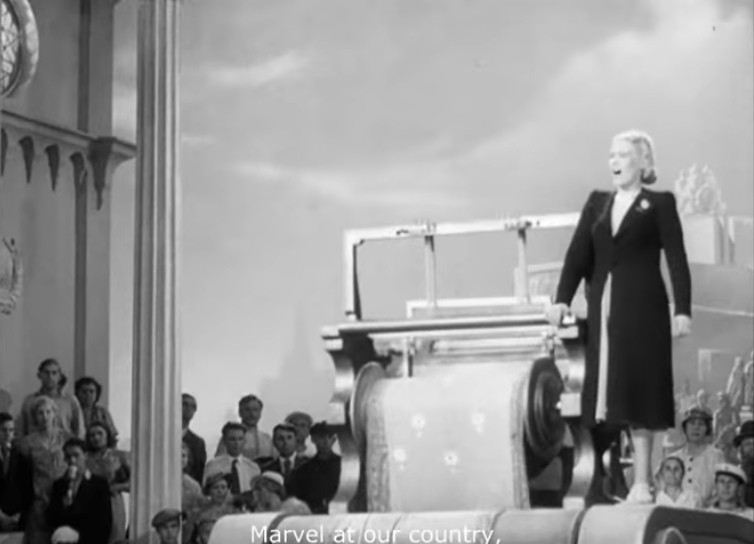
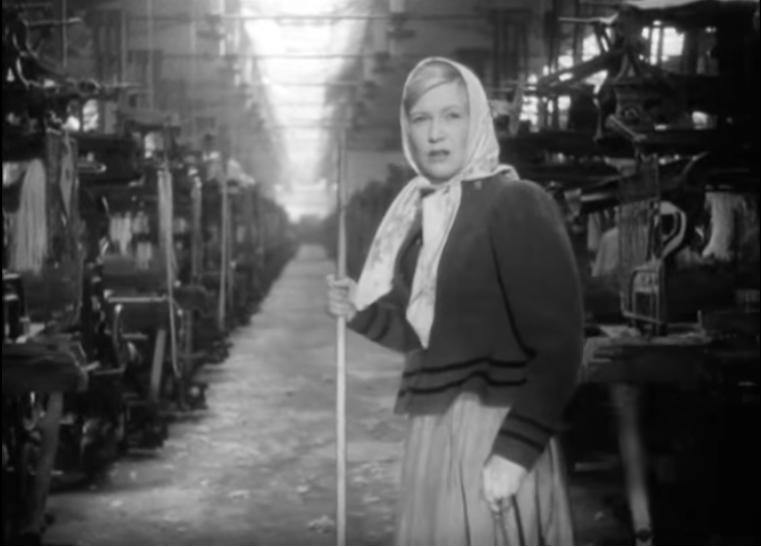
In Tanya our hero, played by the same actress, directed by the same director, is already born into Soviet life. She has a few of the qualities associated with the conscious positive hero. She is a citizen and seems quite willing two want to learn and work for the good of the nation and its people. Her first obstacle isn’t shame but a mistress who doesn’t appreciate her affinity for education. Upon meeting other citizens who share this same basic quality does she begin her path to transformation. She has found her collective and begins her work towards her own industrialization. Tanya’s internal struggle is she is simply not happy unless she’s the most productive worker who ever existed. This is why her path is not just her path, but a bright and radiant one. It is the best path, not just to be a so-so Soviet but to be so Soviet that you are the greatest representative of the ideals of the nation. It takes her years to achieve this goal and in a brilliant flashback scene, Tanya is taken through all of the stages of her citizenry as it eventually, literally, drives her to receive an Order of Lenin. This final flashback scene is probably the most important of the film as it shows there are many steps to becoming the perfect socialist citizen which can all can be achieved through living the ideals of socialism.

These films were both created after the doctrine of socialist realism had been formally proclaimed. All pessimism and criticism had been banned from all Soviet art. Both films completely conform to the code and are extremely positive towards socialism and the USSR. Marion and Tanya channel the ideals of Stalin and run off characters in the films that do not live these ideals. It is no surprise that Aleksandrov himself received multiple awards including the Order of Lenin for films he made throughout his career. These films are perfect examples of the art output under the doctrine of socialist realism.


 Movie Blind Spot
Leave a comment