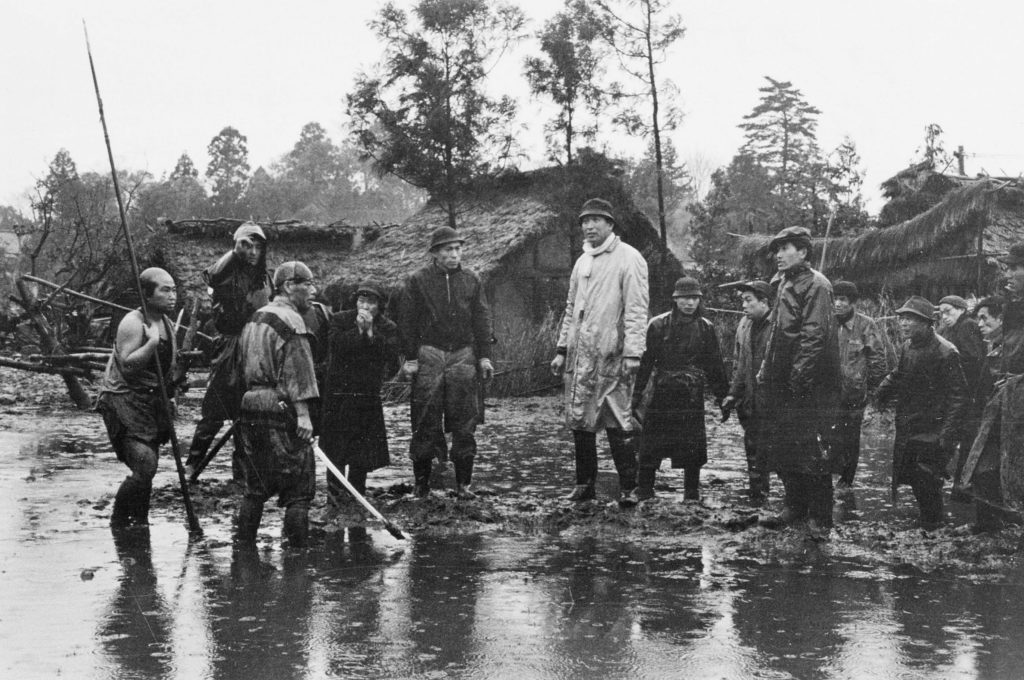
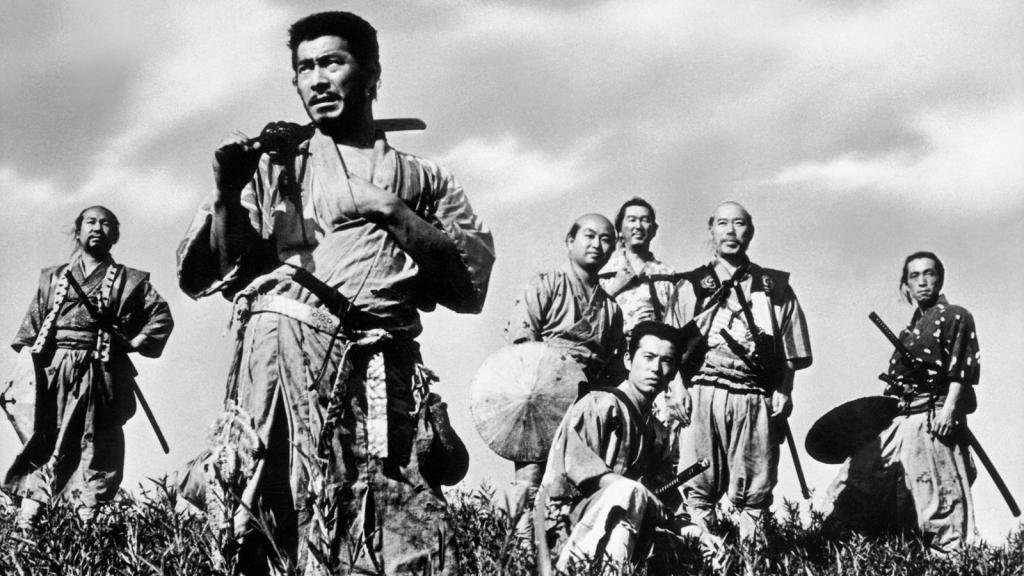
During the period of time in which Seven Samurai takes place, in 1586 during the Sengoku period of Japanese history, when Japan was coming to the end of a more than 200 years of civil war with factions fighting all over the country. The deaths of many leaders known as Diamyo, left the samurai class with no master to serve. These lord-less samurai were known as ronin (wave-men), left to float along, where ever it may be, upon on waves of fortune. Some became bandits and some used their skills for a more noble cause.
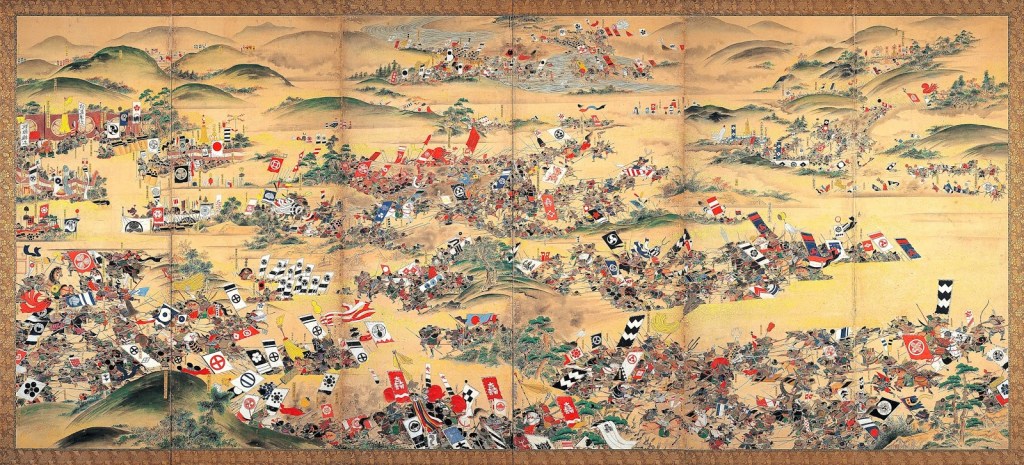
The Sengoku period is a period in Japanese history of near-constant civil war, social upheaval, and political intrigue from 1467 to 1615. The Sengoku period was initiated by the Ōnin War in 1467 which collapsed the feudal system of Japan under the Ashikaga Shogunate. – Wkikpedia
The peasant class, represented by the farmers in this film, have seen the ways the wars effect their land and homes, and fear nearly everything. But as Kikuchiyo explains to the samurai during the film, when presenting armor found in a farmer’s home, it is because of the samurai and the wars that they are wily, untrustworthy, and so fearful. The peasants see themselves below the samurai, as they would/should in this political system, and the samurai see themselves as a higher class than that of the farmers. They do learn through working together during the film to trust each other more, as the farmers are fearful of what the samurai are capable throughout the first act of the film.
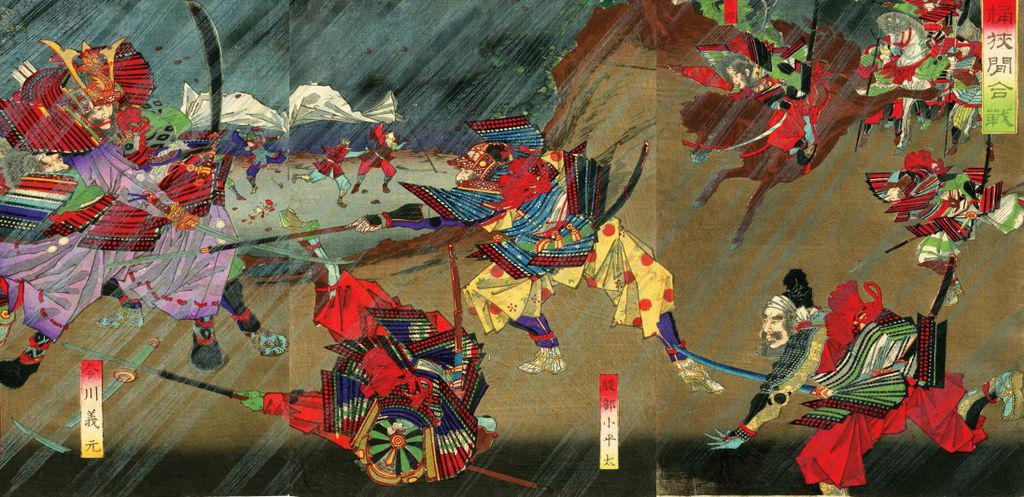
The emperor is officially the ruler of Japan during
the late medieval era but his position is mainly ceremonial. True power rests in the shogun ‘s possession, a noble warlord forming a feudal military government.
The Magnificent Seven takes place during a time after civil war in America. During the settling of the American West law and order was hard to be found. Lawlessness was one of the defining characteristics of the time and place. In this we see rather than a class difference, the gunfighters are not seen as noble members of a higher class, but as bandits themselves. Only those with actual State or Federal Authority would be seen as noble.
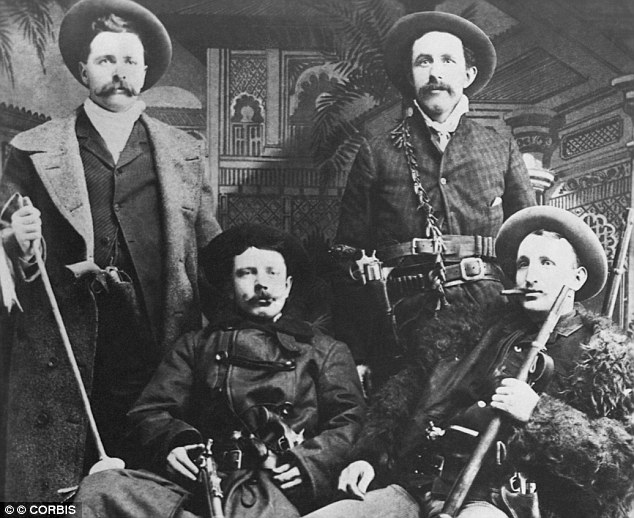
Brothers in crime: Jesse, front left, and Frank, front right, James pose with Cole and Bob Younger (rear left and right)At their peak they were the most feared gang of robbers in the Wild West.
Even though in both films the main character or characters are seen showing their scrupulous value before they are approached, the farmers in The Magnificent Seven wait until they see it before they approach the gunfighters. In Seven Samurai the farmers seem content on any samurai that would do they job for food if they could find one. They are lucky to stumble upon Kambei, who takes pity in them and decides to help.
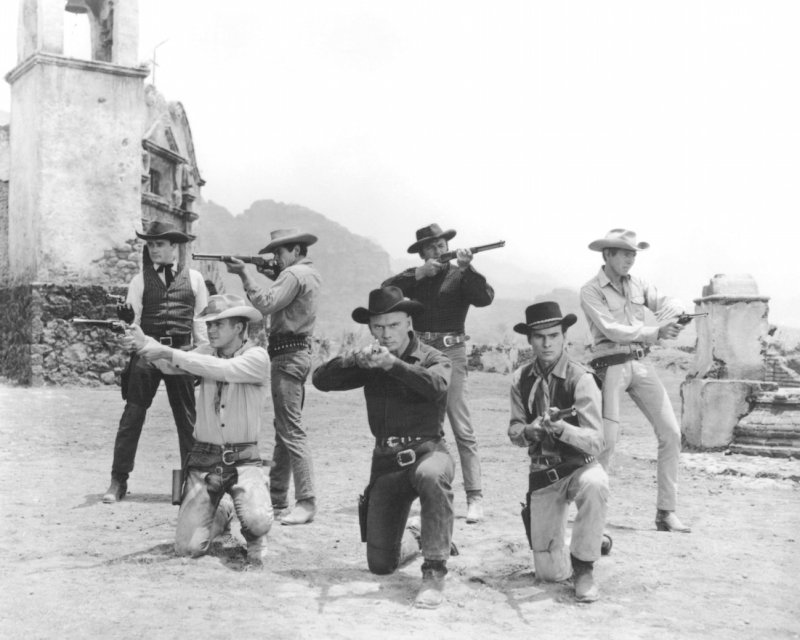
The principle cast in a publicity still for ‘The Magnificent Seven’, directed by John Sturges, 1960. Left to right: Robert Vaughn as Lee, Steve McQueen as Vin Tanner, Charles Bronson as Bernardo O’Reilly, Yul Brynner as Chris Adams, Brad Dexter as Harry Luck, Horst Buchholz as Chico, and James Coburn as Britt. (Getty Images)
In Seven Samurai the group could be characterized more as leaders and defenders than the gunfighters in The Magnificent Seven. The samurai are relying on the farmers to want to defend their home and band together to fight. This is similar in The Magnificent Seven however the trust is never really there. As Seven Samurai progresses the farmers will is eventually handed over the samurai.
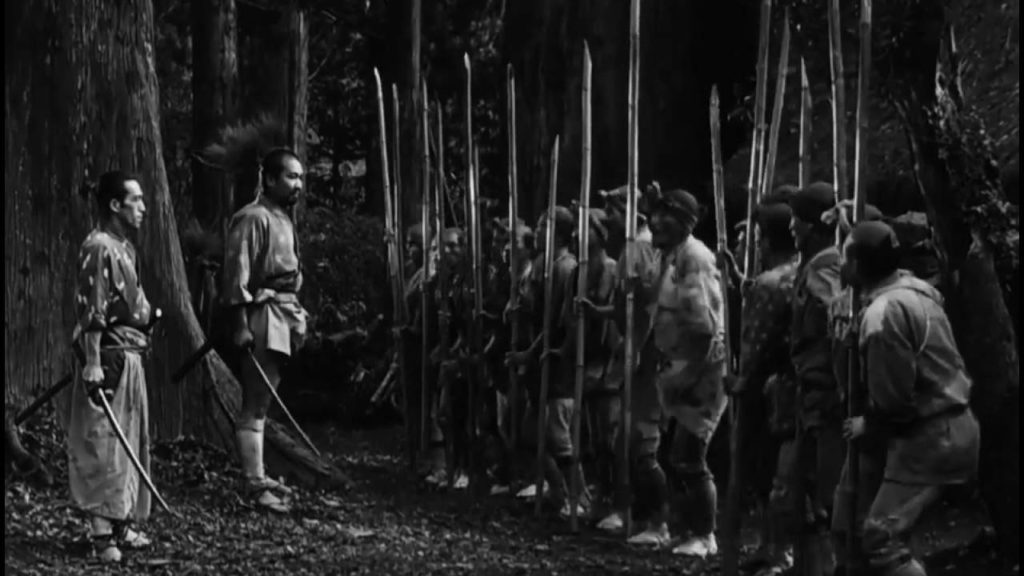
The farmers give their trust to the Samurai and submit to training the themselves to defend their village.
This has its place in history as well as the ego is left out of the equation. The farmers in The Magnificent Seven never really place their trust fully in the gunfighters. They allow themselves to be trained by them and help them set up defense positions in the town, but hide all the women for fear the bandits will rape them. They are still considered dishonorable even though they haven’t done anything to procure that reputation.
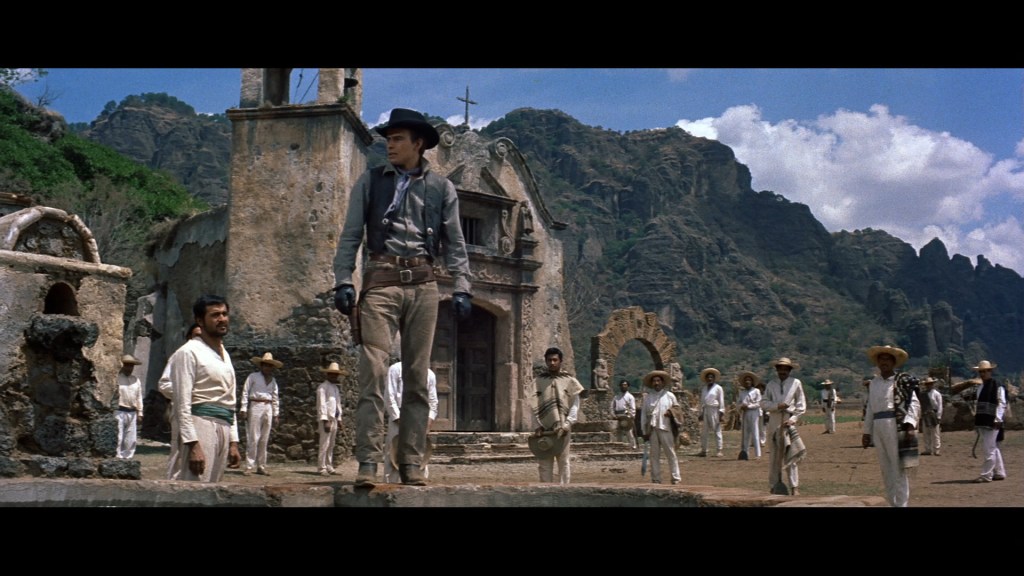
Before the end of The Magnificent Seven the gunfighters are kicked out of town once more before they decide, because of the American mindset at the time, to go “save the day.” This comes off as more heroic for our gunfighters rather than leading a town of fearful farmers to a victory they earned and deserve. The old man refers to them as an act of god as they leave the town. “…like the way a strong wind helps them get rid of locusts.” The ones that survive ride off into the sun as heroes.
The samurai as leaders and defenders also brings up their past. Samurai were the leaders of the military. They were officers and trained military tacticians. Battle is their number one charge. As the film progresses, we see this strategy come into focus, as walls and moats are built to help defend the village. They were born into this caste and even as ronin, continue to use those skills effectively to help the farmers. The separation between the farmers and the samurai fades away as both the early deaths of the samurai and farmers are taken with equal weight. This is really effective because at that point in Japanese history, the class differences would never have put them in this very situation.
The seven gunfighters get this characteristic, although it is never really established. Yes, they help build those very similar walls and moats, they are choosing to do so because they can and want to. They live the outlaw life because of their ego and their freedom. They could be farmers, they could be shopkeepers or even lawmen, unlike the class system of Japan at the time where class would have separated them, but they want to be heroes and they choose to be, even in death.


 Movie Blind Spot
Leave a comment